
About Me
I wasn't taught about money growing up, and it nearly cost me everything.
I was raised in an upper-middle-class family, the oldest of eight kids. My dad had an incredible work ethic and provided well. My mom was an amazing woman who kept our household of ten (plus unwed mothers, foreign exchange students, and anyone else who needed a place to stay) running like a machine. From a young age, I was her right hand, doing the shopping, running errands, swiping the credit cards she handed me to buy groceries, clothes, and gas for the family. When I went to Setzer's to pick up prescriptions or Hardware Hank to get some odds and ends for our house projects, I was asked if I wanted to put the balance on my parents' house account, and I would just say, "Yes, please."
Most weeks, I'd spend $800 to $900 at the grocery store back in the 80s, not including milk and other supplies the milkman dropped off at our house every week. To me, that was normal. It was all I knew. My friends' parents were spending $100 to $150 for the week, and when my friends came along on grocery runs, they'd nearly fall over at the register. I didn't get it. This was just how things were done.
By the time I got to college, I had opened 14 credit cards and bought my first car (with a personal loan and my own money from mowing lawns, babysitting a lot, and working at Jerry's Supervalu). Why fourteen? Honestly? Because my mom usually carried that many in her purse, and I thought that's what adults were supposed to do. I barely ever saw cash handed to anyone. Small balances on multiple cards felt manageable until they weren't. The math caught up with me fast.
Then I got married.
My husband would watch me come home from the store with a single overflowing cart and ask why I'd bought so much and who was coming over for dinner. I'd beam with pride; I got it all in ONE cart this time! (Growing up, we routinely had eight to 10.) He's remind me that he didn't earn my dad's income and we couldn't afford all this. That we couldn't sustain my normal. I'd call me mom for advice and she'd tell me to hang in there and that he'd come around. I'd fight with my husband. I'd cycle through guilt, frustration, and confusion, wishing someone, anyone, had taught me this stuff before I had to learn it the hard way.
That's when I made a promise to myself: one day, I'm going to teach the class I wish I'd had.
I started with my own daughters. By the time both of them graduated from college, they had credit scores in the low 800s, were debt-free (except for some college debt), had real budgeting habits, understood how compound interest works, and had the confidence to handle their own finances without the fear and shame I had.
That's when I knew this couldn't stop with my own family.
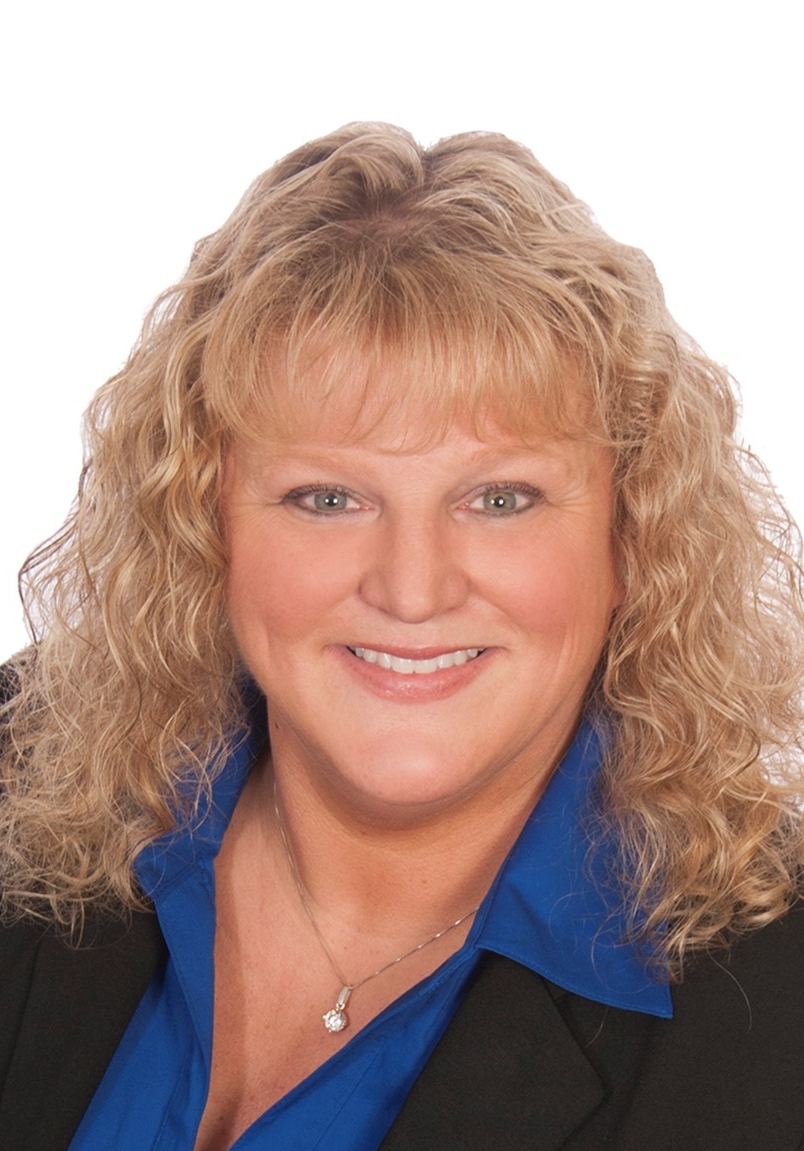
My Background as an Educator
I've spent my career in education. I hold a Master of Arts in Education with a concentration in Curriculum Development, and I've taught at nearly every level, starting in preschool, then kindergarten, second grade, fifth grade, and eventually substituting across elementary, middle, and high school classrooms.
It was during my time with high schoolers that something started to bother me.
I kept noticing students struggling with basic math, and not in the way you'd expect. Capable, bright teens couldn't make change. They didn't understand percentages in any practical way. So, I started asking them questions: "Do you know how a credit card works?" Have you ever made a budget? Do you know what a credit score is?
The answer was almost always the same blank stare.
Then came the moment I'll never forget. I stopped at a fast-food restaurant after school one day, and one of my own students was working at the register. The register went down mid-transaction, and he had to calculate my change manually. He couldn't do it. He had to call over a coworker, and together, two high school students, side by side, slowly worked out how much money they owed me. They still weren’t quite sure, so they asked me what I was supposed to get back.
It wasn't their fault. No one had taught them. And these were good kids, kind, hardworking, motivated. They just hadn't been given the tools.
That moment made my earlier promise to myself feel urgent. These weren't just my kids who needed this. It was an entire generation.
Why I Teach Teens
Here's what I've come to believe after years in classrooms and at my own kitchen table: teens aren't struggling because they're irresponsible or uninterested. They're struggling because no one has ever actually shown them how money works in the real world. Not at school. Not in textbooks. Often not even at home because, like me, their parents weren't taught either. They just thought we knew it.
That's the cycle I'm here to break.
What Changed for My Family Can Change for Yours
I don't share my story because I'm proud of the mistakes I made. I share it because if it had been anyone in my life, a teacher, a counselor, a course who'd sat me down at 16 and explained how credit cards actually work, I would have saved myself years of stress, arguments with my husband, and money I'll never get back.
I can't go back and give that to teenage me.
But I can give it to your teen.
Stephanie McCarthy, M.A.Ed.

Innovation
Fresh, creative solutions.

Integrity
Honesty and transparency.

Excellence
Top-notch services.

FOLLOW US


COMPANY
WORK WITH US
LEGAL
Copyright 2026. Eagle Vision Consulting Group. All Rights Reserved.